
Post-Workout Meal: What to Eat After the Gym (Indian Food)
What to eat after the gym, Indian style: protein per meal, whether the 30-minute anabolic window is real, and a table of dal, paneer, egg and soya meals.
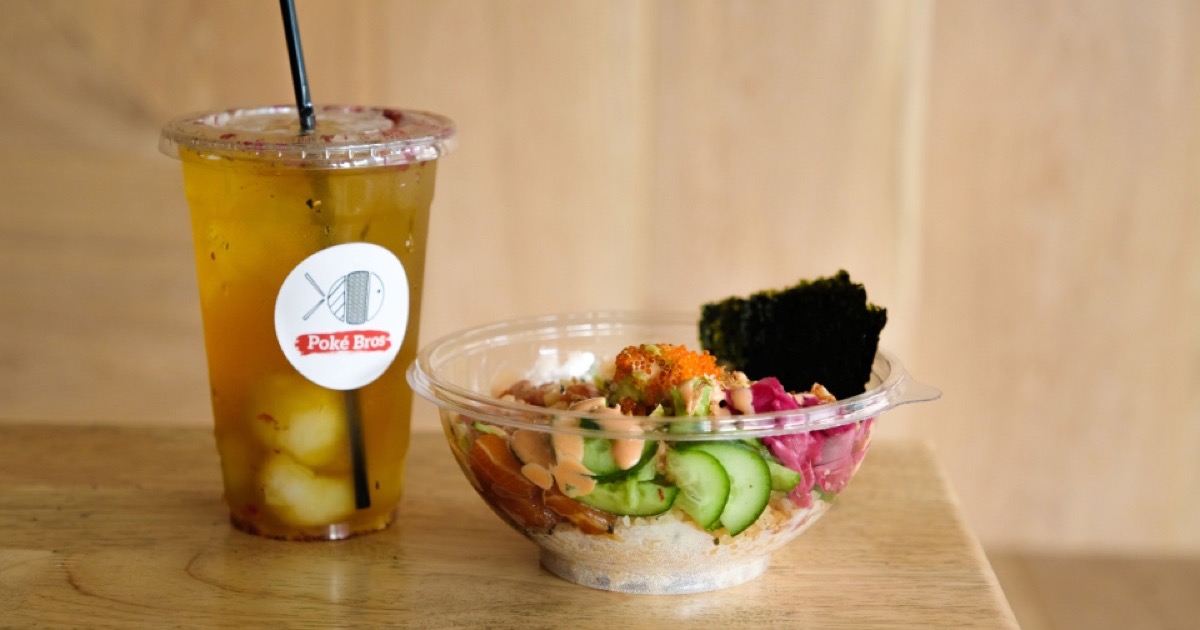
After the gym, eat a normal meal with a good dose of protein (roughly 20 to 40 g for most adults, or about 0.3 to 0.4 g per kg of body weight) plus some carbohydrate, within a couple of hours. There's no strict 30-minute "anabolic window"; your total protein for the day matters far more than the exact timing. Paneer bhurji with roti, egg bhurji, dal-rice with curd, soya pulao or rajma-chawal all work.
Work out your daily total first with the protein calculator, then use the table below to build meals that hit it.
Is the 30-minute anabolic window real?
Not the way gym talk describes it.
When Schoenfeld, Aragon and Krieger pooled 23 studies in a 2013 meta-analysis, the apparent benefit of eating protein close to training disappeared once total daily protein was accounted for. They concluded the evidence doesn't support the claim that protein within an hour of training meaningfully improves strength or muscle gain.
A companion review by Aragon and Schoenfeld (2013) gives a more practical rule:
- If you ate before training, its amino acids are still circulating afterwards, so there's no rush.
- Try not to leave more than about 3 to 4 hours between your pre-workout and post-workout meals.
- If you trained fasted, or 4 to 6 hours after your last meal, eat protein fairly soon after the session.
The ISSN position stand on protein and exercise (Jäger et al., 2017) notes the muscle-building effect of a workout lasts at least 24 hours, though it tapers off. So the meal after training matters, but so do the next few.
If you want to plan the other side of the session, see the pre-workout meal guide.
What matters most: daily protein or timing?
Daily protein, clearly. The same ISSN position stand says total protein and calorie intake are the most important factors for gains from resistance training, and recommends 1.4 to 2.0 g of protein per kg of body weight a day for most people who exercise.
For a 70 kg person, that's 98 to 140 g a day. Most Indian diets don't reach that by accident, so the post-workout meal is simply a useful slot to add protein. If you're vegetarian and trying to reach a three-figure number, the 100 g protein vegetarian Indian diet shows a full day gram by gram.
How much protein should the post-workout meal have?
The research gives a fairly tight range:
- The ISSN stand suggests about 0.25 g per kg, or 20 to 40 g of high-quality protein per meal, spread every 3 to 4 hours.
- The 2016 joint position of ACSM, the Academy of Nutrition and Dietetics and Dietitians of Canada recommends about 0.3 g per kg after exercise and at regular meals through the day.
- Schoenfeld and Aragon (2018) suggest 0.4 g per kg per meal across at least four meals, to reach at least 1.6 g/kg a day.
| Body weight | 0.3 g/kg per meal | 0.4 g/kg per meal |
|---|---|---|
| 50 kg | 15 g | 20 g |
| 60 kg | 18 g | 24 g |
| 70 kg | 21 g | 28 g |
| 80 kg | 24 g | 32 g |
| 90 kg | 27 g | 36 g |
And the old line that "the body can only use 30 g at a time"? In a 2023 study by Trommelen and colleagues, 100 g of protein after a workout produced a bigger and longer anabolic response (over 12 hours) than 25 g. A big protein meal isn't wasted, though spreading protein out is still the easier way to reach your total.
Indian post-workout meals: protein and calories
Values are approximate and depend on recipe and portion. They're based on the Indian Food Composition Tables 2017 (IFCT) for dals, paneer, atta, rice, milk and egg, and USDA FoodData Central for cooked rice, curd and banana. A katori is a medium bowl of about 200 ml; dal weights are raw, before cooking; 1 tsp oil is about 5 g and 45 kcal.
| Meal | Portion | Protein (approx.) | kcal (approx.) |
|---|---|---|---|
| Dal-rice | 1 katori cooked rice (150 g), 1½ katori toor dal (45 g raw), 1 tsp oil | 14 g | 390 |
| Dal-rice + curd | As above, plus 1 katori curd (150 g) | 19 g | 480 |
| Rajma-chawal | 1 katori cooked rice, 1½ katori rajma (45 g raw), 1 tsp oil | 13 g | 375 |
| Paneer bhurji + roti | 75 g paneer, onion-tomato, 1 tsp oil, 2 medium rotis (60 g atta) | 21 g | 490 |
| Egg bhurji + roti | 3 eggs, 1 tsp oil, 2 medium rotis | 26 g | 460 |
| Curd + banana | 1 katori curd (150 g), 1 medium banana | 6.5 g | 200 |
| Hung curd + banana | 150 g low-fat hung curd, 1 medium banana | 16 g | 200 |
| Chana chaat | 50 g raw kabuli chana (boiled), onion, tomato, lemon | 9 g | 165 |
| Soya pulao | 50 g raw rice, 30 g dry soya chunks, vegetables, 1 tsp oil | 19 g | 350 |
| Milk | 1 glass (250 ml) | 8 g | 180 |
Soya chunk protein (about 52 g per 100 g dry) is from typical packet labels, so check yours. Hung curd values are from USDA's low-fat Greek-style yogurt; home-made hung curd varies with how long you drain it.
Notice how many classic meals land below 20 g. Dal-rice, rajma-chawal, chana chaat and curd with fruit are good recovery food but light on protein. The fix is usually one extra item: a katori of curd, 50 g of paneer, two eggs or a handful of soya.
To total up your own plate, use the Indian food calorie counter.
Do vegetarians need to combine foods for "complete" protein?
A bit, and most Indian meals already do it.
"Complete" protein means a food supplies all the essential amino acids your body can't make, in useful amounts. Dairy (milk, curd, paneer), eggs and soya are good on their own. Cereals and pulses each have a gap: ICMR-NIN explains in its Dietary Guidelines for Indians 2024 that cereals are low in lysine and pulses are low in methionine, so eating them together covers both. Their guidelines suggest roughly 3 parts cereal to 1 part pulse by raw weight, with milk improving the mix further.
So dal-roti, rajma-chawal and khichdi work. Two things to know:
- You don't need both in the same bite. Across the day is fine.
- Combining fixes the quality, not the quantity. A plate of rice with a thin dal is still low in total protein. Size the protein portion properly.
The ISSN stand also suggests about 700 to 3,000 mg of leucine per meal, an amino acid that helps switch on muscle building. So vegetarians do well to aim towards the upper end of the protein range per meal, or include dairy or soya.
Do you need carbs after a workout?
For most gym-goers, just your normal meal's worth. Carbohydrate timing matters when you train hard twice in a day. The ACSM, AND and Dietitians of Canada position recommends 1.0 to 1.2 g of carbohydrate per kg per hour for the first 4 hours when you have less than 8 hours before the next demanding session, then a return to normal eating.
A hypothetical example: a 60 kg footballer training at 7 am and again at 4 pm would aim for about 60 to 72 g of carbs in each of the first few hours. One katori of cooked rice (about 42 g of carbs) and a medium banana (about 27 g) together give about 69 g. If your next session is tomorrow, regular meals refill your glycogen anyway.
What should you drink after the gym?
Water, mostly, and enough to replace what you sweated out. The ACSM fluid replacement position stand suggests drinking about 1.5 litres for every kilogram of body weight lost during exercise, spread over the next few hours, with a normal salted meal to replace sodium.
The weigh-in method, plus ORS and coconut water, is in how much water to drink when you work out.
What if you train late at night?
Eat dinner after the session, as normal. A 9 pm workout followed by a 10:30 pm dinner is fine if the day's calories fit your goal.
Dairy suits late training. The ISSN stand reports that 30 to 40 g of casein before sleep raises overnight muscle protein synthesis. Those studies mostly used casein supplements, but milk, curd and paneer are rich in casein. For example, 100 g of paneer plus a glass of milk gives about 27 g of protein.
If heavy food at night upsets your sleep, keep dinner smaller and move protein to lunch and the evening snack.
What are the cheapest good post-workout options?
Soya and dal win on cost. Using illustrative 2026 city prices (soya chunks ₹200/kg, rice ₹60/kg, eggs ₹7 each, paneer ₹440/kg), a hypothetical comparison:
- Soya pulao (19 g protein): 30 g soya (about ₹6) + 50 g rice (about ₹3) + vegetables and oil, roughly ₹15 to ₹20.
- Egg bhurji (3 eggs, 26 g with rotis): about ₹21 for the eggs, plus rotis.
- Paneer bhurji (75 g paneer): about ₹33 for the paneer alone.
Your prices will differ, so redo the arithmetic with your own bill. Adding 30 g of soya to a dal-rice plate takes it from about 14 g to nearly 30 g of protein.
When does a protein shake make sense?
When food is harder. A typical whey scoop gives about 20 to 25 g of protein (check the label), which is one clean post-workout dose with no cooking.
It helps if you:
- train early and leave straight for work, or travel a lot
- can't reach your daily total from food without going over your calories
It isn't needed if you can eat a meal like the ones above within a couple of hours. If you do buy one, read the whey protein guide for India first for how to check labels and spot fakes.
The short version
- Aim for about 20 to 40 g of protein (0.3 to 0.4 g/kg) in the meal after training
- Eat within a couple of hours; sooner if you trained on an empty stomach
- Daily protein (1.4 to 2.0 g/kg) matters far more than timing
- Most dal-rice style meals need one extra protein item: curd, paneer, eggs or soya
- Extra carbs matter mainly if you train hard again within 8 hours
- Rehydrate about 1.5 L per kg lost, with a salted meal
If you have kidney disease, diabetes on medication, are pregnant, are under 18, or have a history of an eating disorder, check with your doctor or a registered dietitian before raising your protein or changing how you eat around training. This is general information, not medical advice.
Useful links
- Schoenfeld, Aragon and Krieger (2013), The effect of protein timing on muscle strength and hypertrophy: a meta-analysis
- Aragon and Schoenfeld (2013), Nutrient timing revisited: is there a post-exercise anabolic window?
- Jäger et al. (2017), ISSN position stand: protein and exercise
- Schoenfeld and Aragon (2018), How much protein can the body use in a single meal for muscle-building?
- Thomas, Erdman and Burke (2016), ACSM/AND/DC position: Nutrition and athletic performance
- Trommelen et al. (2023), The anabolic response to protein ingestion during recovery from exercise has no upper limit
- ACSM (2007), Exercise and fluid replacement position stand
- ICMR-NIN, Dietary Guidelines for Indians 2024 (PDF)
- ICMR-NIN, Indian Food Composition Tables 2017 (PDF)
- USDA FoodData Central
Cover photo: Healthy Food by Poke Bros, CC0, via stocksnap.
Frequently asked questions
Do I have to eat within 30 minutes after a workout?
No. A 2013 meta-analysis found that once total daily protein was accounted for, eating protein within an hour of training made no clear difference to muscle or strength gains. If you ate a meal a few hours before the gym, eating your next proper meal within an hour or two afterwards is fine.
Is dal-rice a good post-workout meal?
Yes, as a base. A katori of rice with one and a half katori of toor dal gives roughly 14 g of protein and 390 kcal, with plenty of carbohydrate. Add a katori of curd or some paneer to bring the protein closer to the 20 to 30 g most adults should aim for in a meal.
Can I eat only fruit after the gym?
Fruit alone gives carbohydrate and water but almost no protein. A banana has about 1 g. Pair it with curd, hung curd, milk or paneer, or eat a proper meal soon after, so the meal has a decent protein dose.
Is it okay to eat a full dinner after a late-night workout?
Yes. A normal dinner after a 9 or 10 pm session is fine for most people, as long as it fits your daily calories. A dairy-based meal such as paneer, curd or milk also gives you slow-digesting casein before sleep.
Do I need a protein shake after every workout?
No. A shake is a convenience, not a requirement. If you can eat a meal with 20 to 30 g of protein within a couple of hours, food does the same job. A shake helps when you're travelling, short on time or can't reach your daily protein from food.