
How to Lose Belly Fat: What Works (and Why Crunches Don't)
How to lose belly fat: why crunches can't spot-reduce, what shrinks visceral fat, Indian food swaps, a 12-week plan and how to track your waist at home.
You can't burn belly fat by training your belly. Crunches strengthen the muscles under the fat, but the fat itself comes off only when your whole body is in a calorie deficit, and regular moderate-to-hard cardio is the exercise most consistently shown to shrink the deep (visceral) fat around your organs. Combine a modest deficit, 150 to 300 minutes of cardio a week, two or three strength sessions and decent sleep, and measure your waist every two weeks instead of staring at the mirror.
Check where you stand first with the waist-to-height ratio calculator.
What kind of belly fat do you actually have?
There are two kinds, and they behave differently.
- Subcutaneous fat sits just under the skin. It's the part you can pinch.
- Visceral fat sits deeper, inside the abdomen, around the liver, gut and other organs. You can't pinch it.
ICMR-NIN's Dietary Guidelines for Indians 2024 describe abdominal obesity as fat in and around the internal organs and say it is now considered more harmful, linking it with type 2 diabetes, fatty liver, high blood pressure and heart disease.
Why does belly fat matter more for Indians?
Because it's common, and it shows up early. The ICMR-INDIAB study, which surveyed over 1.1 lakh adults across the country, found 39.5% had abdominal obesity, more than the 28.6% with generalised obesity.
That's why Indian guidelines use the tape, not only the scale. The 2025 revised definition of obesity in Asian Indians by Dr Anoop Misra and colleagues keeps the waist cut-offs of 90 cm or more for men and 80 cm or more for women, and also flags a waist-to-height ratio above 0.5. These numbers first came from the 2009 Indian consensus statement.
| Check | Men | Women | Source |
|---|---|---|---|
| Waist circumference (abdominal obesity) | 90 cm or more | 80 cm or more | Misra et al. 2025 |
| Waist-to-height ratio | Above 0.5 | Above 0.5 | Misra et al. 2025 |
| Waist-to-hip ratio | 0.90 or more | 0.85 or more | WHO |
The waist-to-height ratio guide and the waist-to-hip ratio guide explain each one in detail.
Can you spot-reduce belly fat with crunches?
No, and two well-known studies show it neatly.
In a 2011 trial by Vispute and colleagues, 24 sedentary adults were split into two groups. One group did seven abdominal exercises, 2 sets of 10 reps, five days a week for six weeks. Diets were kept the same. At the end, the ab group could do far more curl-ups (47 against 32 on average), but there was no significant change in belly fat, waist circumference or abdominal skinfolds.
In a 2013 study by Ramírez-Campillo and colleagues, 11 young adults trained only one leg on the leg press for 12 weeks, doing 960 to 1,200 light reps per session, three times a week. Total body fat dropped by about 5%. But the fat came off mainly from the arms and trunk, not from the leg that did all the work.
Your body decides where fat comes from, and you can't redirect it by choosing an exercise. Ab work still builds a strong core. It just won't melt the layer on top.
What actually reduces visceral fat?
1. Aerobic exercise, done regularly and hard enough
This is the best-supported tool. A 2013 meta-analysis by Vissers and colleagues pooled 15 studies with 852 overweight adults and found exercise reduced visceral fat even without dieting. Moderate or high intensity aerobic training worked best, with reductions of more than 30 cm² (women) and 40 cm² (men) on CT scans possible within 12 weeks. Low intensity didn't show a significant effect.
The dose matters. In the STRRIDE trial, people who stayed inactive gained 8.6% visceral fat in six months. The equivalent of about 18 km of walking or jogging a week stopped that gain. Jogging about 32 km a week actually reduced visceral fat, without any change in what they ate.
In practical terms: brisk walking, incline walking, cycling, swimming or jogging where you're breathing harder but can still talk. Work up to the WHO's 150 to 300 minutes of moderate activity a week.
2. Strength training, mainly to protect muscle
The evidence for weights alone is mixed. Vissers found a modest effect, but an earlier meta-analysis by Ismail and colleagues of 35 trials found aerobic exercise reduced visceral fat while resistance training alone did not, concluding that aerobic exercise is central.
So why lift? Because when you eat less, you lose muscle along with fat. A review in Advances in Nutrition found both cardio and resistance exercise help preserve muscle during weight loss, and resistance exercise also improves strength. More muscle means a firmer shape when the fat does come off. Two or three full-body sessions a week is enough.
3. A modest calorie deficit
Cardio helps, but the plate decides most of the result. ICMR-NIN describes a 500 to 750 kcal daily deficit as typical for weight loss, advises not going beyond a 40% deficit, and says weight-loss diets shouldn't go below 1,000 kcal a day. Work out your maintenance and target with the calorie calculator, and read calorie deficit and maintenance calories for how to set it sensibly.
4. Enough sleep
In a 2010 study by Nedeltcheva and colleagues, 10 overweight adults dieted for two weeks twice, once with 8.5 hours in bed and once with 5.5 hours. On the same diet, short sleep cut the fat lost from 1.4 kg to 0.6 kg and increased muscle loss, and people felt hungrier. It's a small study, but worth taking seriously.
5. Less (or no) alcohol
ICMR-NIN advises avoiding alcohol. It supplies 7 kcal per gram, more than carbohydrate or protein, and the guidelines say it can contribute to abdominal obesity.
What should you change in your food?
No single food burns belly fat. The ICMR-NIN guidelines point to refined grains, processed foods and high sugar intake as drivers of abdominal obesity, and suggest:
- Sugar: avoid it or keep it to 20 to 25 g a day for adults. Sweet chai several times a day, a mithai and a cold drink can cross that easily.
- Cooking oil: keep it to 25 to 30 g a day per person, across all meals.
- HFSS and ultra-processed foods: cut back on foods high in fat, sugar and salt, such as packaged namkeen, biscuits and fried snacks.
- Whole grains, pulses and vegetables: include vegetables at every meal, and choose whole grains, dal and beans.
Simple Indian swaps that usually save calories:
- Phulka or plain roti instead of paratha with ghee, naan or bhature (maida plus oil)
- Roasted chana or a fruit instead of samosa, kachori or bhujia at 5 pm
- Chai with less sugar, then none; buttermilk or nimbu pani without sugar instead of cold drinks
- Grilled or tandoori instead of fried; tadka with a measured spoon, not a pour
Which belly fat myths can you ignore?
- Fat-burning teas and drinks. A Cochrane review of green tea found studies outside Japan showed almost no difference in weight (0.04 kg) or waist size (0.2 cm). Jeera water, lemon-honey water and "detox" drinks have no good trials showing they shrink belly fat.
- Sweat belts and body wraps. They make you sweat, which is water, and it comes straight back when you drink. Fat isn't lost through the skin.
How should you measure progress?
Use the tape, not just the scale. NICE's guidance measures waist midway between the lowest rib and the top of the hip bone.
- Measure in the morning, before eating, standing relaxed.
- Find your lowest rib and the top of your hip bone at the side; the tape goes midway between them.
- Keep the tape level and snug, and read it after a normal breath out.
- Repeat every two weeks at the same time.
Divide your waist by your height (both in cm) or use the waist-to-height ratio calculator. The waist-to-hip ratio calculator is a useful second check.
A 12-week plan outline
| Weeks | Cardio | Strength | Food focus | Track |
|---|---|---|---|---|
| 1–2 | 20–30 min brisk walk, 5 days | 2 full-body sessions, light | Cut sugary drinks; sugar in chai halved | Waist, weight, sleep hours |
| 3–4 | 30–40 min, 5 days; add incline | 2–3 sessions, learn form | Set a 500 kcal deficit; measure oil | Waist every 2 weeks |
| 5–8 | 40–45 min, 5 days, moderate effort | 3 sessions, add weight slowly | Swap fried snacks; bigger dal/sabzi portion | Waist, weekly average weight |
| 9–12 | 45 min, 5 days; one session brisker if fit | 3 sessions, progressive | Review portions; recalculate calories if weight stalls | Waist and photos at week 12 |
From week 5 that's 200 to 225 minutes of cardio a week. If weight stops moving for three or four weeks, read the weight loss plateau guide before cutting food further.
How long does it take to lose belly fat?
Longer than ads say. At ICMR-NIN's safe rate of about half a kilo a week, 12 weeks might mean roughly 5 to 6 kg if you stay consistent. Some of that will come from your waist, but not on your schedule, because your body picks the order. Many people notice their waist measurement and clothes changing before the mirror shows much.
The deep fat matters most for health, and the studies above saw it drop within 12 weeks of regular cardio, so keep going even if your belly still looks soft.
When should you see a doctor?
See a doctor first if you have diabetes, heart or kidney disease, high blood pressure, are pregnant, under 18, or have a history of disordered eating.
Also remember that not every big belly is fat. A belly that swells quickly over days or weeks, feels tight or hard, comes with pain, vomiting, breathlessness, unexplained weight loss or a lump needs a medical check, not a diet. The NHS advises seeing a GP for bloating that keeps coming back or doesn't settle, and urgent care for a swelling or lump in the tummy or sudden severe pain. If your waist is over 90 cm (men) or 80 cm (women), ask your doctor for a blood sugar, blood pressure and lipid check.
The short version
- Crunches don't burn belly fat; whole-body fat loss does
- Do 150 to 300 minutes of moderate-to-brisk cardio a week
- Lift 2 to 3 times a week to keep muscle
- Eat in a 500 to 750 kcal deficit, never below 1,000 kcal a day
- Cut sugar, maida, fried snacks and oil; fill up on dal, sabzi and whole grains
- Protect your sleep and drink less alcohol, ideally none
- Measure your waist every 2 weeks; aim for under half your height
- Sudden or painful swelling is a doctor's job, not a diet's
This is general information, not medical advice.
Useful links
- ICMR-NIN, Dietary Guidelines for Indians 2024 (PDF)
- Anjana et al. (2023), ICMR-INDIAB metabolic NCD health report of India
- Misra et al. (2025), Revised definition of obesity in Asian Indians living in India (PDF)
- Vispute et al. (2011), The effect of abdominal exercise on abdominal fat
- Ramírez-Campillo et al. (2013), Regional fat changes induced by localized muscle endurance resistance training
- Vissers et al. (2013), The effect of exercise on visceral adipose tissue in overweight adults
- Slentz et al. (2005), STRRIDE: inactivity, exercise and visceral fat
- Nedeltcheva et al. (2010), Insufficient sleep undermines dietary efforts to reduce adiposity
- WHO guidelines on physical activity and sedentary behaviour (PDF)
- NHS: Bloating
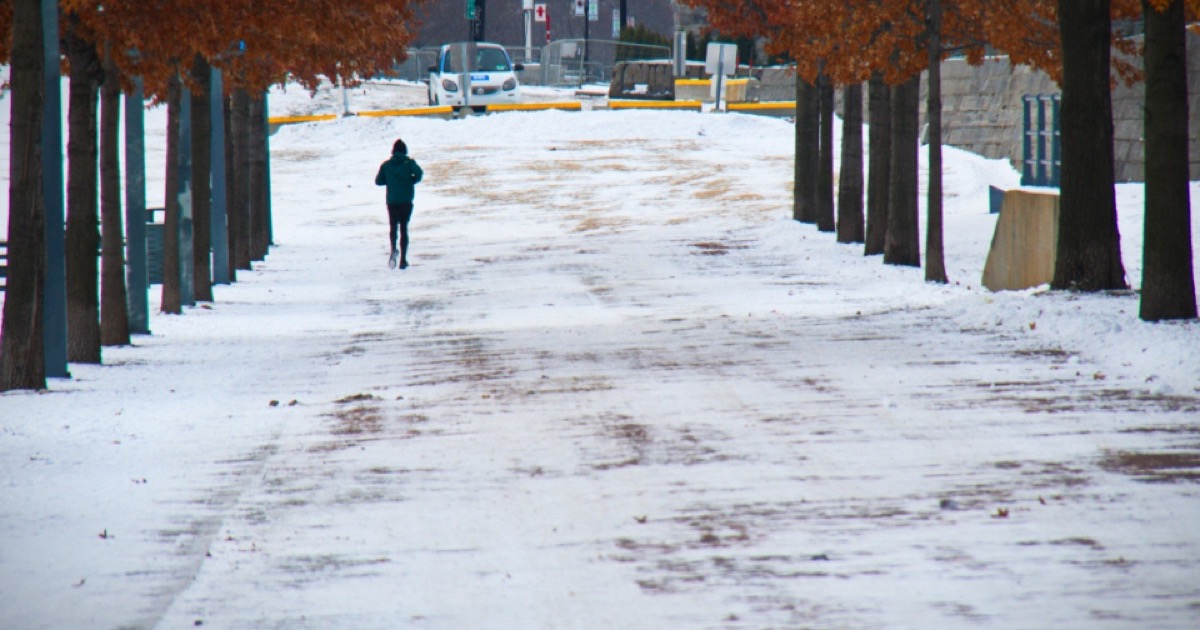
Cover photo: Runner Jogging by Bob Richards, CC0, via stocksnap.
Frequently asked questions
Can I lose belly fat in 7 days?
No. You can lose some water and gut contents in a week, which may make your waist look a little smaller, but fat comes off slowly. ICMR-NIN considers about half a kilo of weight loss a week safe, so plan in months, not days.
Do crunches burn belly fat?
Not in any useful way. In a 2011 trial, six weeks of ab training five days a week made people's core muscles stronger but did not change their belly fat or waist size. Crunches build the muscle underneath; a calorie deficit and regular cardio remove the fat on top.
What is the fastest way to reduce visceral fat?
Moderate-to-vigorous aerobic exercise most days plus a modest calorie deficit. A 2013 meta-analysis found aerobic exercise reduced it even without dieting. Adding strength training helps you keep muscle while you lose fat.
Why do I have a big belly but thin arms and legs?
Many South Asians store a larger share of fat around the abdomen and inside it, even at a normal BMI. That's why Indian guidelines use waist size (90 cm for men, 80 cm for women) alongside weight. If your waist is over those numbers, get your sugar, blood pressure and cholesterol checked.