
Automatic Gym Membership Reminders: Set Up Once, Stop Chasing
Set up automatic gym membership reminders that go out on time: what to automate, email, SMS and WhatsApp rules in India, and a reminder schedule you can copy.
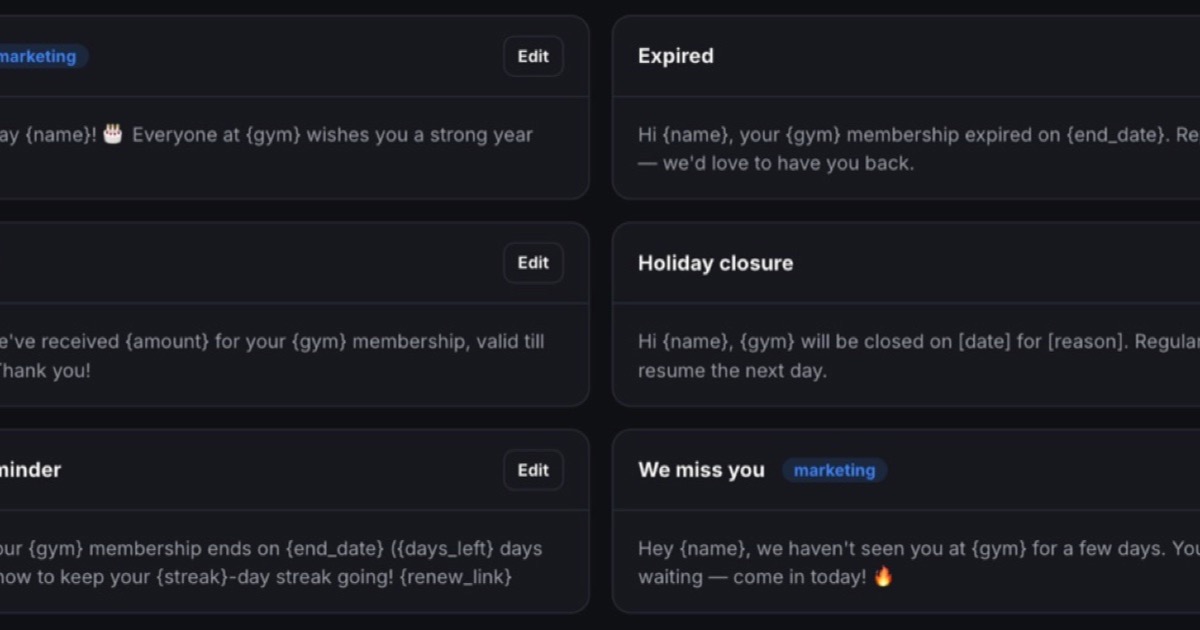
Automatic gym membership reminders work best when software handles the routine messages (the "your plan ends on 15 October" notes before and on the expiry day) and a person handles the follow-up after a member has lapsed. You set the schedule once, and the system checks end dates every day so nobody has to remember. In India, email is the easiest channel to automate, SMS needs DLT registration with your telecom operator, and WhatsApp can only be fully automated through Meta's paid Business Platform.
This post is about the system, not the wording. If you want the timing logic and copyable templates, read membership renewal reminders: timing and templates first, then come back here to put it on autopilot.
Why do manual renewal reminders keep failing?
Most gyms already know they should remind members. The problem is that a manual routine depends on someone remembering to do a boring job at the busiest hour of the day.
- The desk is busy when it matters. Evenings are when members arrive, enquiries come in and cash is collected. Checking for upcoming expiries is the first thing skipped.
- It depends on one person. If the owner does it, it stops when the owner is travelling or unwell. If the receptionist does it, it stops when they leave.
- It's inconsistent. Some members get three reminders, some get none, and nobody can say which.
- Nobody knows what was sent. Without a record, you can't tell whether a member ignored a reminder or never got one.
None of this is laziness. It's a daily job with no visible reward on the day you do it, which is exactly what software is good at.
What should be automated, and what should stay personal?
Automation is great for anything that is the same for every member and only needs a date to trigger it. It is bad at anything that needs judgement or a relationship.
| Task | Automate? | Why |
|---|---|---|
| Checking end dates every day | Yes | Pure date maths, never forgotten |
| "Your plan ends on [date]" reminders before expiry | Yes | Same message, just the name and date change |
| Expiry-day notice | Yes | Factual and time-bound |
| A daily or weekly expiring list for the desk | Yes | Saves the register hunt |
| Follow-up 3 to 7 days after expiry | Prepared by software, sent by a person | A human message gets a reply; a fourth automated one gets ignored |
| Phone call to a long-time member who lapsed | No | This is a conversation, not a reminder |
| Offers, discounts, plan changes | No | Needs judgement, and changes the legal and platform rules (see below) |
A good rule: let the system send the first reminders, then spend your time only on members who didn't respond.
What are the rules for each channel in India?
The channel you pick decides how much you can automate and what you have to set up first. This is general information as of 2026; check with your lawyer or provider for your situation.
Email: the easiest to automate
Email needs no telecom registration and no platform fee per message. The rules that matter are about consent.
India's Digital Personal Data Protection Act, 2023 says personal data should be used for the purpose the person agreed to, and that consent can be withdrawn about as easily as it was given. Most duties under the DPDP Rules, 2025 phase in over 18 months; build the habit now.
In practice:
- Renewal and expiry emails about the member's own plan are service messages they would reasonably expect.
- Promotional emails (festival offers, "come back for 20% off") should go only to members who agreed to hear about offers, with a clear way to stop.
- Put the consent line on your joining form, and note who opted out.
SMS: needs DLT registration
For automatic SMS from a business name through a bulk SMS provider, TRAI's Telecom Commercial Communications Customer Preference Regulations, 2018 apply. TRAI's advice to senders lists what you need: register your business as a principal entity, register a header (the sender name), and register the structure of each content template, with fixed text and variable parts. If any step is missing, the messages are not delivered.
The February 2025 amendment added more checks on senders, including periodic re-certification of headers and templates. It is doable, but it is paperwork, and every new wording needs a new template approved.
WhatsApp: automatic only through the paid Business Platform
There are two very different routes.
The WhatsApp Business Platform (API). This is the only way to send messages fully automatically. The WhatsApp Business Messaging Policy says you may only message people who have given you their number and opted in, and you must honour requests to stop. Any message you start must be a pre-approved template, and Meta sorts templates into utility, marketing and authentication. A plain "your plan ends on [date]" is close to utility; add a discount and it becomes marketing. Since July 2025, Meta charges per delivered template message, with rates depending on category and country.
Click to chat (manual, but fast). WhatsApp's click to chat links open a chat with a message already typed. Software can build that link with the member's name, plan and date filled in. You still look at it and tap send, from your normal WhatsApp or WhatsApp Business app. No API, no template approval, no per-message charge from Meta. The trade-off is that a person has to tap.
For a gym with a few hundred members, the second route is often enough: the software remembers and types, you send.
Channel comparison
| SMS (bulk, from a header) | WhatsApp Business Platform | WhatsApp click to chat | ||
|---|---|---|---|---|
| Fully automatic | Yes | Yes | Yes | No, someone taps send |
| Setup needed | Software or email tool | DLT entity, header and template registration | Platform account, provider, approved templates | None |
| Per-message cost | Usually included in software | Paid per SMS to provider | Paid per template message to Meta | None from Meta |
| Good for | Records, plan details, scheduled reminders | Short alerts | High-volume gyms and chains | Small and mid-size gyms |
A reminder schedule you can copy
This is a common schedule, not a rule. Annual members may want a first nudge two or three weeks out.
| When | Message | Channel | Who sends |
|---|---|---|---|
| 7 days before expiry | Plan ends on [date], how to renew | Automatic | |
| 3 days before | Short reminder | Email or WhatsApp | Automatic, or one tap |
| 1 day before | "Ends tomorrow" | One tap from the expiring list | |
| On the expiry day | Plan ends today | Automatic | |
| 3 days after | Personal check-in: "All okay? Want to keep your slot?" | WhatsApp or a call | A person |
| 2 to 3 weeks after | Win-back message | Email or WhatsApp | A person, using a template |
Two things make any schedule work:
- Stop when they renew. Automation should check the plan status before each send.
- Make renewing easy. Every reminder should say how to pay: at the desk, by UPI, or on the link you use. If you want renewals to happen without any reminder at all for some members, read our guide to UPI AutoPay for gym memberships.
For members who already owe money from a past plan, a reminder isn't enough. That needs the steps in collecting pending gym dues.
How do you know if your reminders are working?
Track one number: your renewal rate. Each month, count how many plans expired and how many of those renewed within, say, 14 days.
Here's a hypothetical example. Say 50 plans expire in a month and 38 renew within two weeks. Your renewal rate is 38 ÷ 50 = 76%. If a better routine lifts it to 84%, that's 42 renewals, or 4 more members a month. At ₹1,000 a month each, that's ₹4,000 more in monthly fees from that month's batch alone, and it keeps adding up as those members stay.
Use the free gym churn calculator to see your churn, member lifetime value and how much revenue lost members cost you. If your renewal rate is healthy and you want growth instead, the referral ROI calculator shows whether a referral reward pays for itself.
Check it monthly. One bad month can be exam season; three is a pattern.
Quick checklist
- Every member has a correct end date and phone number on file
- Joining form includes consent for WhatsApp, email and offers, with a way to stop
- Before-expiry and expiry-day reminders go out automatically
- Someone looks at the expiring list at least twice a week
- Reminders stop as soon as a member renews
- A person follows up 3 to 7 days after expiry
- Bulk SMS only after DLT registration; WhatsApp automation only via the Business Platform
- Renewal rate checked once a month
How MyGymGate handles this
MyGymGate is gym management software for Indian gyms: QR check-in on any Android phone, member passes, retention lists and reminders, for ₹399 a month with unlimited members. Here's how the reminder system works, step by step, including what it doesn't do.
- Import your members once. We set it up for you and import members from Excel, a Google Sheet or even photos of your register, with their plan end dates.
- Renewal and expiry emails go out by themselves. MyGymGate sends automatic renewal and expiry reminder emails in your gym's name, logo and colours. You don't have to remember anything.
- The expiring-this-week list is on your dashboard. Open the owner app or web dashboard and you see who is expiring this week. That's your list for the personal follow-up.
- One tap opens WhatsApp with the message filled in. Pick a ready template, tap, and WhatsApp opens with the member's details already written. You press send. There's no Business API involved, so there are no template approvals or per-message charges from Meta, but it also means WhatsApp messages are not sent automatically.
- Expired plans are stopped at the door. If a member's plan has run out, the scanner phone won't let them check in, so the renewal conversation happens at the desk that day instead of months later.
- Win back the ones who left. Bulk email goes to segments like expired or inactive members, and automatic "we miss you" emails go to members who haven't visited for 2 to 14 days (you choose). The win-back screen lets you pick members who haven't come for 2+ days and email them. Our post on winning back inactive members has the wording.
What it doesn't do: MyGymGate doesn't collect or process payments, and it doesn't send SMS. Members renew the way they do today, at the desk or by UPI, and you update their plan.
If you'd like to see the reminders and the expiring list with your own member list, book a free 15-minute demo. Setup and member import are included, and most gyms go from first call to first check-in in about a day. You can also get the Android app and look around first.
Useful links
Frequently asked questions
Can a gym send automatic WhatsApp reminders without the Business API?
Not fully automatic. Without the WhatsApp Business Platform (API), messages have to be sent by a person. What software can do is prepare the message and open WhatsApp with it already filled in, so the owner or desk staff only taps send.
Do I need DLT registration to send fee reminder SMS in India?
If you send SMS from a business header through a bulk SMS provider, yes. TRAI's rules require the sender entity, the header and each message template to be registered before commercial messages can be sent. Sending a normal SMS from your own phone, one at a time, is different, but it is not automation.
How many reminders should a gym send before a membership expires?
A common schedule is three before expiry (about 7, 3 and 1 day before), one on the expiry day and one a few days after. Automate the early, routine ones and keep the after-expiry follow-up personal.
What is MyGymGate and how much does it cost?
MyGymGate is gym management software for Indian gyms with QR check-in, automatic renewal and expiry emails, an expiring-this-week list and one-tap WhatsApp templates. It costs ₹399 a month on one plan with unlimited members and everything included, with no setup fee.
Will automatic reminders annoy my members?
Only if they are too frequent, too salesy or sent to people who never agreed to hear from you. Keep reminders short and factual, stop as soon as someone renews, and honour any request to stop.